


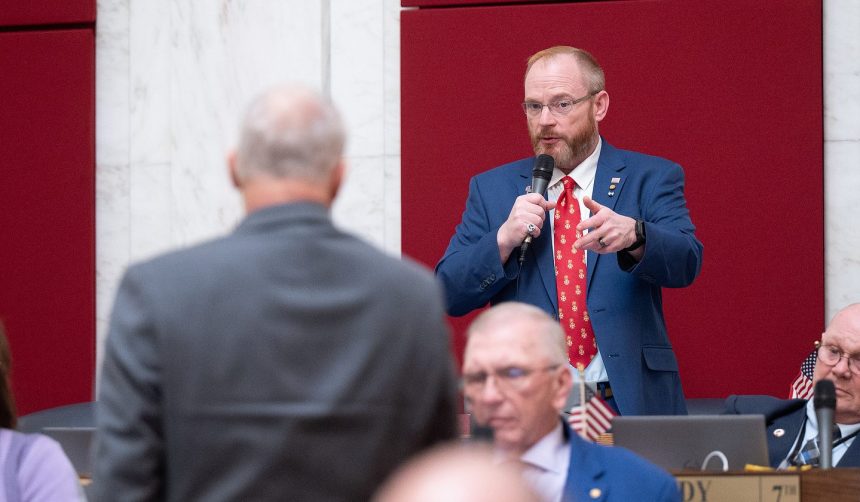
CHARLESTON — Del. Chris Anders (R – Berkeley, 97) on Wednesday criticized some members of the West Virginia House of Delegates after lawmakers voted down an amendment he co-sponsored to Senate Bill 84, calling the decision a failure to protect private property rights.
The House rejected the amendment in an 81-11 vote.
The amendment, sponsored by Delegates Chuck Horst, Chris Anders and Henry Dillon, sought to add language to SB 84 clarifying that law enforcement officers could not “enter or remain upon the private property of a person beyond the land immediately surrounding and associated with a private dwelling without first obtaining either consent from a property owner or a valid search warrant.”
In a video message recorded at the State Capitol on February 25, Anders said the proposal was intended to address what is known as the “open fields doctrine,” a legal principle stemming from U.S. Supreme Court rulings in the 1920s holding that Fourth Amendment protections do not extend to open fields beyond the immediate area of a home.
“If you think that you have any privacy on your property, I highly recommend you listen to this entire message,” Anders said.
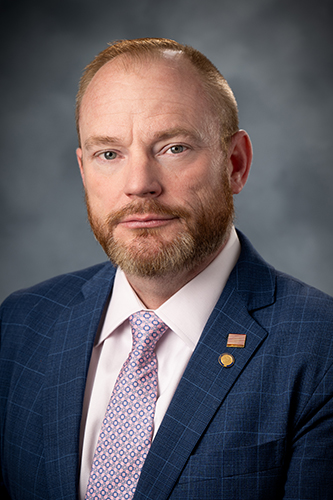
Anders
Anders argued that the doctrine allows law enforcement officers to enter private property without a warrant, probable cause or due process, so long as they do not intrude upon the home itself or its immediate surroundings, known as the curtilage.
“The Fourth Amendment clearly states that you are secure in your person, your property, possessions and effects,” Anders said in the video. “We attempted to restore your right to force them to get a warrant before they wander all over your property.”
During floor debate, Anders said opponents characterized the amendment as being anti-law enforcement, an accusation he rejected.
“We’re absolutely supporting law enforcement by helping them stay with their oath of office, which is to the Constitution,” he said.
Anders added that officers would still be permitted to act if they directly observed a crime in progress.
Opponents of the amendment argued during debate that the added language could hinder law enforcement’s ability to investigate criminal activity.
In his message, Anders also referenced the historical origins of Fourth Amendment protections, citing colonial opposition to British “general warrants” that allowed broad searches without specific cause.
“We’re 250 years away from when we declared our independence from Great Britain,” Anders said. “One of the major reasons was the British general warrant.”
Despite the amendment’s defeat in the House, Anders said the effort is not over. Because SB 84 originated in the Senate, the bill will return to that chamber for further consideration.
“We’re going to work with the State Senate,” Anders said. “We’re going to do everything we can to end the open fields doctrine and restore your privacy as required under the Fourth Amendment.”
Anders encouraged constituents to review the roll call vote and share his message, saying voters should pay attention to how lawmakers stand on constitutional issues.